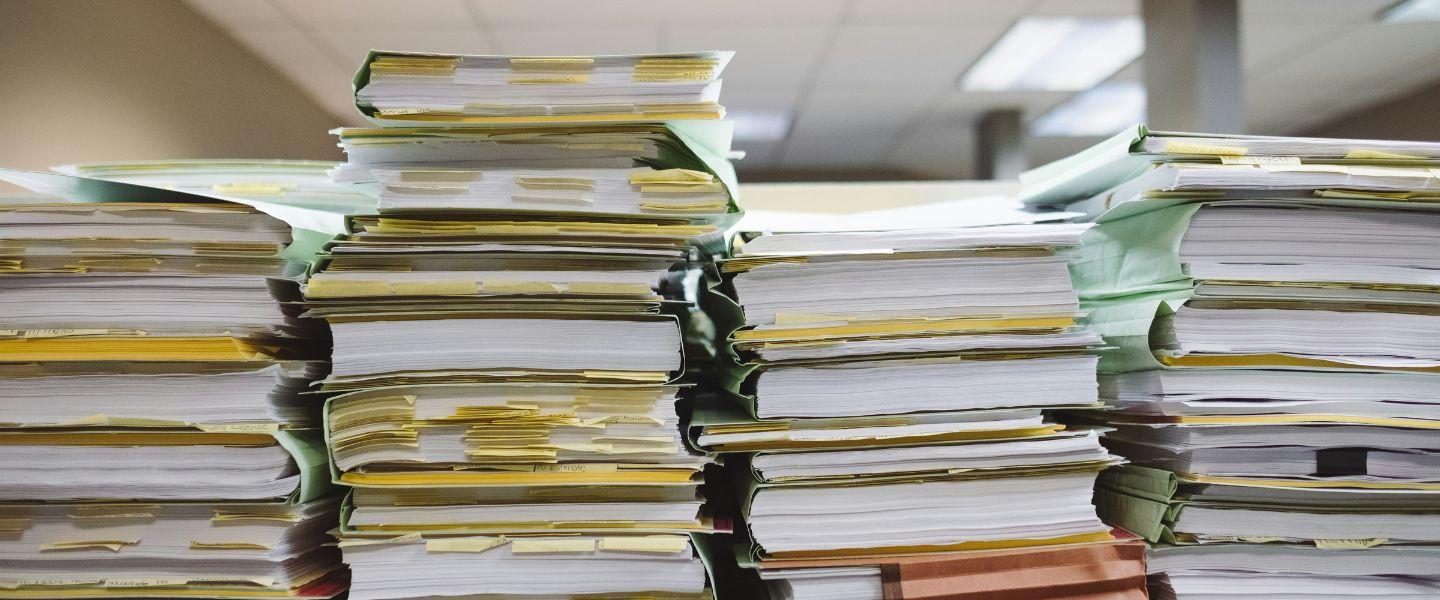
The following words were written by a person seeking sanctuary about her experience waiting for a decision. It is a deeply personal account that also powerfully speaks to universal themes of displacement and belonging. We are publishing her text in full and unedited.
My name is a Reference Number.
When people hear the word “refugee,” they often imagine a journey. An arrival. A border crossed.
What they do not imagine is the waiting room.
The asylum system, for me, has felt like living inside a waiting room with no clock.
I arrived in the United Kingdom carrying a story that was already heavier than my body. I thought safety would feel like a door opening. Instead, it felt like standing in a corridor where every door required proof.
Proof of pain.
Proof of fear.
Proof that the things done to me were real.
I learned that survival is not enough. You must become your own archivist. Your own witness. Your own historian.
You collect police reports that never protected you.
Medical records that describe wounds but not terror.
Statements that try to compress years of fear into a few paragraphs.
You take the worst moments of your life and arrange them neatly on paper.
Then you wait for someone to decide whether they believe you.
There is a particular loneliness in being disbelieved before anyone has spoken the words.
It settles into the body.
“You take the worst moments of your life and arrange them neatly on paper.”
I know that loneliness personally. I have sat awake at night refreshing my email, hoping for a message that would change everything, only to find nothing. I have opened letters with shaking hands, afraid of what the next demand might be. I have gone to appointments carrying a folder full of documents, trying to look calm while my mind was racing. I have repeated the same painful story so many times that it began to feel like I was leaving pieces of myself in every room.
The asylum system measures time differently. Days become emails. Weeks become appointments. Months become silence.
Meanwhile, life continues outside.
People fall in love.
People buy houses.
People make plans for next year.
And you remain suspended between a past that nearly killed you and a future that has not yet been granted permission to exist.
I know many people understand displacement.
Perhaps not the same roads. Not the same governments. Not the same histories.
But there is a common language spoken by displaced people.
It is the language of uncertainty.
It is learning how to carry your entire life in documents.
It is watching strangers debate your right to exist somewhere safely and feeling grateful.
“The asylum system measures time differently. Days become emails. Weeks become appointments. Months become silence.”
It is being reduced to a case number while fighting to remain a human being.
For me, that uncertainty has shown up in ordinary moments too. It has been not knowing whether I could plan a week ahead. It has been wondering if I should spend money on food or save it for travel to an appointment. It has been trying to stay hopeful while every part of life feels temporary.
It has been explaining to people why I cannot simply “move on,” when the system itself keeps reopening the wound.
What has surprised me most is how fragile and how resilient people can be at the same time.
I have met asylum seekers who are artists, teachers, students, writers, carers, researchers, dreamers. People whose lives cannot be contained within the word “refugee.”
I have met people who have lost almost everything and still found ways to help someone else.
I have seen that in my own life too. On the days when I felt I had nothing left, someone offered me a seat, a meal, a phone call, a kind word, a reminder to keep going. Sometimes survival has looked like getting through one more interview, one more delay, one more night without answers.
Sometimes it has looked like choosing to speak, even when my voice was shaking.
That is what keeps me going.
Not the paperwork.
Not the policies.
People.
The volunteer who remembers your name.
The friend who asks if you got home safely.
“On the days when I felt I had nothing left, someone offered me a seat, a meal, a phone call, a kind word, a reminder to keep going. “
The community that reminds you that you are more than your trauma. Because that is what every displaced person deserves.
Not charity.
Not suspicion.
Not endless waiting.
But dignity.
The simple dignity of being believed when we speak of what happened to us. The dignity of safety. The dignity of a future.
And perhaps that is what solidarity means.
To refuse to let another human being disappear into a file, a statistic, a headline, or a political argument. To look at them and say: “I see you. You are here. And your life matters.”
But just saying is not realistically enough.
Letting people integrate and start over means letting people move on with their lives.
There is another kind of waiting that rarely makes headlines.
The waiting to contribute.
Many asylum seekers arrive with skills, qualifications, experience, and ambitions. Some were teachers. Some were engineers. Some were artists, nurses, researchers, business owners.
Yet we are told to wait.
Wait for permission.
Wait for a decision.
Wait to begin living again.
The work ban does more than prevent employment. It prevents belonging.
It tells people who have survived war, persecution, torture, and displacement that their role is to remain on the sidelines while life moves around them.
“There is another kind of waiting that rarely makes headlines. The waiting to contribute.”
I do not believe most people want to spend years depending on support. I think most people want what everyone wants.
To wake up with purpose. To contribute. To pay their way. To build something. To feel useful.
The right to work is about more than money.
It is about dignity.
It is about identity.
It is about being seen as a human being with something to offer rather than a problem to be managed.
When we talk about lifting the ban, we are not asking for special treatment.
We are asking for the opportunity to participate.
To contribute to the communities that have given us refuge.
To rebuild our lives while we wait.
Because safety is not only the absence of danger.
Safety is also the presence of hope.
The Lift the Ban campaign is calling for people seeking asylum to have the right to work while they wait for a decision on their asylum claim. Find out more about the campaign here.
If you would like to support the campaign, you can donate to City of Sanctuary Sheffield here.